Download Our Brand Ambassador Contract Template Today
Use our brand ambassador contract template to create clear, protective agreements for successful brand collaborations. Download now!

Think of a brand ambassador contract template as the foundation for your partnership. It’s more than just a legal document; it’s a detailed roadmap that lays out everything from the specific content you expect to how compensation works, who owns what, and how you can part ways amicably. This is easily the most critical tool you have for sidestepping misunderstandings and protecting your business.
Why a Solid Contract Is Your Best Form of Brand Protection
Before you just grab any old template off the internet, it’s vital to understand what this document really does. A formal contract isn't just about ticking a legal box. It’s the very thing that turns a casual, handshake agreement into a professional, enforceable partnership. This is especially true in a market with clear regulations like Germany.
Without a contract, you’re essentially guessing. What do you do if an ambassador posts something that completely misses the mark on your brand values? After the campaign wraps up, who gets to keep using those fantastic photos they created? If you never defined what success looks like, how can you possibly measure it? These are the kinds of grey areas where partnerships fall apart and brand reputations take a hit.
Establishing Clear Expectations From Day One
A well-written agreement gets rid of all the guesswork. It acts as the definitive guide that both you and the ambassador can turn to, making sure you’re both pulling in the same direction. This level of clarity isn't restrictive; it's empowering.
A good contract brings precision to several key areas:
- Deliverables: It spells out the exact number and type of posts, stories, or videos you require. No more ambiguity.
- Content Guidelines: This section covers the do's and don'ts, including any mandatory hashtags, tags, or specific brand messaging.
- Performance Metrics: It clearly defines what a successful campaign looks like, whether that’s hitting certain engagement rates or driving sales conversions.
- Compensation: The payment structure is detailed right here, whether it’s a flat fee, a commission-based model, or a product-for-post exchange.
This infographic shows how a contract essentially creates a protective shield around your brand's most important assets.
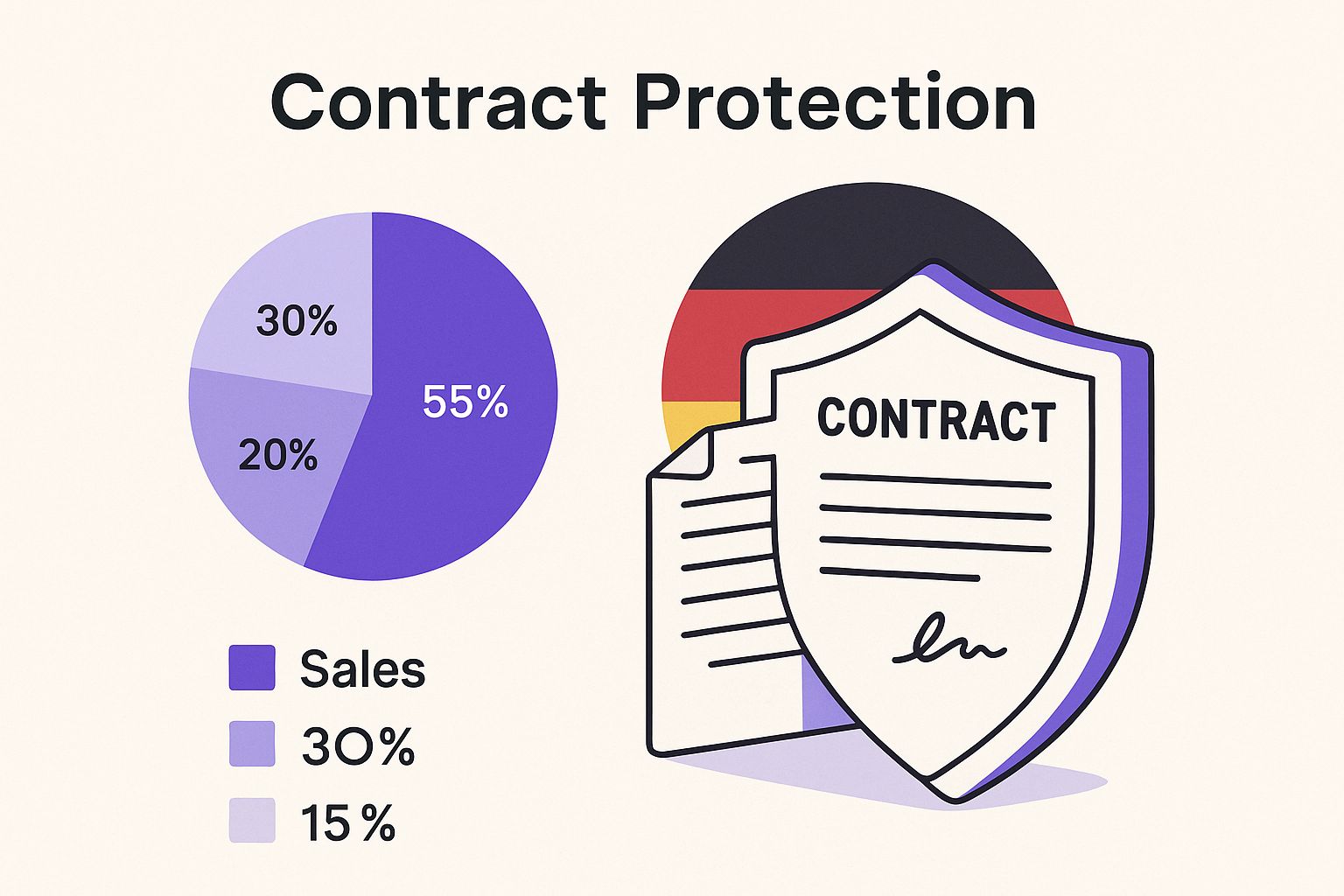
As you can see, each layer of the contract provides comprehensive protection, safeguarding everything from your logo right through to your reputation in the market.
Safeguarding Your Intellectual Property and Reputation
Let me paint you a picture. You partner with a promising new creator for a six-month campaign. They knock it out of the park, creating stunning content that gets incredible engagement. But when the contract ends, they start working with your biggest competitor, using a very similar content style they developed while working with you. If your contract didn't include clauses on usage rights and exclusivity, your hands are tied.
A brand ambassador contract is all about proactive risk management. It anticipates potential disagreements over things like content ownership, confidentiality, and exclusivity, and puts clear rules in place before they can escalate into costly problems.
This forward-thinking approach is non-negotiable in Germany, where the influencer advertising market has exploded thanks to consumer appetite for authentic content. German shoppers put a lot of trust in influencer recommendations, which is why brands are so keen to formalise these partnerships with robust contracts that are legally sound and minimise risk.
A solid contract makes it crystal clear that the content created for your brand belongs to your brand. It defines how that content can be used long-term and can prevent ambassadors from promoting a direct competitor at the same time. For a deeper look into protecting your brand, it's worth exploring broader brand protection strategies. At the end of the day, a thoughtfully customised brand ambassador contract is your first and most effective line of defence.
The Anatomy of a Rock-Solid Ambassador Agreement
A template is a great starting point, but the real strength of your brand ambassador contract lies in its clauses. This is where you iron out the details, protect your business, and make sure everyone is on the same page. Let's break down the non-negotiable parts of any good agreement, translating the legal jargon into practical steps, especially for those operating in the German market.
Think of these clauses not as restrictive rules, but as the blueprint for a smooth, successful, and mutually beneficial partnership. Getting them right from the start prevents headaches later.

Defining the Scope of Work (Leistungsumfang)
This is your chance to get rid of any and all ambiguity. The Scope of Work, known as Leistungsumfang in German, is where you detail exactly what you expect your ambassador to deliver. A vague request like "promote our new skincare line" is a surefire way to get disappointing results.
You need to be specific. Your contract should clearly spell out:
- Content Deliverables: The precise number and format of posts. For example, "Two Instagram Reels (at least 60 seconds each) and four static Instagram Stories per month."
- Platform Specifics: Name the exact social media channels where the content needs to be published.
- Key Messaging: Are there specific talking points, brand values, or product features you need them to mention? List them here.
- Calls to Action (CTAs): If they need to push followers to a landing page or use a specific discount code, make that requirement clear.
A detailed scope of work acts as your guardrail. It prevents the project from going off track and ensures you get exactly the kind of promotion you're paying for.
Setting Clear Content and Usage Rights (Nutzungsrechte)
So, the ambassador creates some amazing content. Who actually owns it, and what can you do with it? This is where the Usage Rights, or Nutzungsrechte, clause comes in. Frankly, this might be one of the most important sections for protecting your brand’s long-term marketing assets.
Without clear usage rights, you could find yourself paying for brilliant content that you have no legal permission to use on your own channels. A solid Nutzungsrechte clause should grant your brand a broad licence to the ambassador’s work.
Make sure your contract explicitly states that your brand has the right to re-share, repurpose, and use the ambassador's content across your own channels—think your website, social media feeds, and even in your paid ad campaigns.
You also need to define how long you have these rights. Is it forever, or just for the duration of the campaign? Nailing down these specifics prevents any future arguments over who owns what. For more ideas on how to get the most out of this content, you'll find some great tips in this guide to user-generated content strategies.
Detailing Compensation and Payment Terms (Vergütung)
Money talk can be awkward, but it doesn't have to be. The compensation (Vergütung) clause needs to lay out the financial arrangement with total clarity to avoid any confusion or late payments.
Your agreement must specify:
- Payment Structure: Is it a monthly flat fee? A pay-per-post arrangement? Commission on sales from their unique link? Or maybe a hybrid model?
- Payment Schedule: When will they get paid? Be precise, like "net 30 days from receipt of a valid invoice, submitted on the last working day of each month."
- Product Gifting: If free products are part of the deal, state their value and clarify that they are part of the compensation package, not just a casual gift.
- Expense Reimbursement: If you’re covering costs like travel to an event, spell out the approval and reimbursement process.
The German influencer market is a serious business. To give you an idea, a major player like Zalando was involved in 119 separate influencer partnerships in 2023 alone. This highlights just how structured these collaborations are, and a watertight compensation clause is standard practice.
Exclusivity and Confidentiality Clauses
These next two clauses are your brand’s bodyguards. They protect you from competitive threats and leaks of sensitive information, setting crucial boundaries for the partnership.
An exclusivity clause is simple: it stops your ambassador from working with direct competitors while under contract with you. The last thing you want is for them to promote a rival’s product the week after your campaign launches. Be sure to define which brands or product types you consider competitors.
A confidentiality clause is just as vital. Ambassadors often get an inside look at your business—upcoming product launches, marketing plans, or internal sales data. This clause creates a legal obligation for them to keep that information under wraps, even after your partnership ends. When drafting these, it's wise to lean on established principles for structuring effective legal agreements, such as comprehensive Terms and Conditions.
Termination Conditions (Kündigung)
Finally, every good contract needs a clear exit strategy. The termination clause (Kündigung) defines how the partnership can be brought to an end by either you or the ambassador.
This isn't about planning for failure; it's about having a professional process in place if things don't work out. Common reasons for termination include:
- Breach of Contract: If someone doesn't hold up their end of the bargain (e.g., the ambassador misses posts or you miss a payment).
- Brand Misrepresentation: If the ambassador's behaviour reflects poorly on your brand and causes reputational damage.
- Notice Period: A "no-fault" option that lets either party end the agreement for any reason, as long as they provide enough notice (e.g., 30 days).
Including these conditions gives both sides security and a predictable process, ensuring the relationship can be wrapped up cleanly and professionally if it comes to that.
Getting the Money Right: Compensation and Performance Goals
How you pay your ambassadors directly shapes the entire partnership. It influences their motivation, the effort they put in, and ultimately, your return on investment. Just throwing a flat fee at someone and hoping for the best is a recipe for disappointment. A well-thought-out compensation plan, tied to clear, achievable goals, is what separates a thriving ambassador programme from a forgotten one.
Let’s get into the practical side of things. We'll look at a few different ways to structure payments that work well in the German market, moving beyond a one-size-fits-all mindset. The goal here is to create a true win-win, where your ambassadors feel genuinely valued and your brand sees real, measurable growth.
Finding the Right Compensation Model
The best way to pay someone really comes down to what you want to achieve. Are you laser-focused on driving sales, or is your main goal right now to get your name out there and boost brand awareness? Your answer will point you to the right model.
Here are a few proven structures I've seen work time and time again. Consider which one aligns best with your brand ambassador contract template.
Pay-Per-Post or Flat Fee: This is the simplest option. You agree on a fixed price for a specific set of deliverables—for example, a flat rate for two Instagram posts and five stories each month. It makes budgeting predictable, which is great, but it doesn't always inspire ambassadors to go the extra mile.
Commission-Based: This is a pure performance model. Ambassadors earn a slice of every sale they generate, tracked with unique affiliate links or personalised discount codes. It’s an incredible way to make sure your marketing budget is directly tied to revenue. No sales, no cost.
Hybrid Model: This is often the sweet spot. It combines the security of a flat fee with the motivation of a commission. For instance, an ambassador might get a base monthly retainer plus a 5% commission on all sales made using their code. This gives them stability while still rewarding fantastic results.
Product Gifting (Product Seeding): This is a common starting point, especially with micro-influencers or those new to your programme. You provide free products in exchange for content. While it’s light on the budget, it's absolutely critical to state the value of the products and outline exactly what you expect in return to avoid any confusion down the line.
Tying compensation directly to performance transforms the partnership from a simple transaction into a shared mission for growth. When ambassadors have a stake in the outcome, they become more invested in creating content that genuinely converts.
Defining What Success Looks Like (KPIs)
A great payment model is useless without solid metrics to measure success. Your contract has to spell out the Key Performance Indicators (KPIs) that actually matter to your brand. Fuzzy goals like "increase engagement" won't cut it. You need specific, measurable targets.
To really get a clear picture of an ambassador's impact, you should be tracking a few key things:
- Engagement Rate: This is about more than just likes. You need to look at comments, shares, and saves to see if the content is truly connecting with people. It’s a good idea to specify a target engagement rate (e.g., 3% or higher) in the contract.
- Reach and Impressions: How many eyeballs are seeing the content? This is your go-to metric if the primary goal is building brand awareness.
- Conversion Rate: For any sales-focused campaign, this is the gold standard. It tells you exactly how many followers who used an ambassador’s link or code ended up buying something.
- Website Traffic: Use trackable links (like UTMs) to see how much traffic an ambassador is driving to your site from their social profiles.
- Content Quality and Brand Alignment: This feels subjective, but you can make it objective. Set clear guidelines. Does the content fit your brand's visual style? Is the messaging on point? Are they representing you professionally?
In Germany, using professional brand ambassadors to boost brand presence is a seriously established strategy. Some agencies manage networks of over 5,000 ambassadors in major cities, training them to perfectly embody brand values. Because of these high professional standards, contracts need to be airtight, detailing every responsibility and performance metric to keep everyone aligned. You can get a sense of the high standards of brand ambassadorship in Germany to understand the landscape.
Taking it to the Next Level with a Bonus Structure
Want to really light a fire under your ambassadors? Add a tiered bonus structure to the contract. This is a brilliant way to reward those who knock it out of the park and gives everyone clear goals to shoot for.
You could structure your bonuses something like this:
- Sales Target Bonus: Generate over €5,000 in monthly sales? Here’s an extra €250.
- Engagement Bonus: If their content hits an average engagement rate above 5% for the month, they earn an extra €100.
- New Customer Bonus: Award a bonus if their unique discount code is used by 50 brand-new customers.
This approach gamifies the partnership a bit and encourages your ambassadors to keep pushing. When you're setting these kinds of goals, it helps to think about them within your wider marketing strategy. For more on that, our guide on how to increase brand awareness has some great insights.
Ultimately, by linking fair pay directly to clear performance goals, your brand ambassador contract stops being just a legal document and becomes a powerful engine for growth.
How to Customise Your Contract Template
A downloadable brand ambassador contract template is a brilliant starting point, but it's never going to be a perfect fit straight out of the box. Think of it like buying a suit off the rack; it gives you the basic shape, but you need a tailor to make it fit you perfectly. Customising that template is what transforms a generic document into a sharp, powerful tool that protects your brand and actually helps you hit your specific goals.
This is where your strategy has to meet a bit of legal common sense. A short-term, three-post campaign with a micro-influencer needs a completely different agreement than a year-long partnership with a major name in your industry. The first might just need to be tight on deliverables, while the second will require some serious clauses covering exclusivity and long-term content rights.

The trick is to adapt the template based on the moving parts of each partnership. Your industry, the ambassador’s influence, and what you’re trying to achieve with the campaign all dictate which parts of the contract need a closer look.
Tailoring for the Ambassador and Campaign Type
No two ambassadors are the same, and neither are marketing campaigns. The very first thing I do when customising a contract is analyse the partnership itself. Is this a quick, tactical promotion, or are we building a deep, long-term collaboration?
For a micro-influencer campaign, for example, you're often after quick, authentic content that feels genuine. Your contract tweaks might look something like this:
- Looser Content Guidelines: You’ll probably want to give them more creative freedom to keep that authentic voice they're known for. The focus is more on the final post than a rigid script.
- Simple Payment Terms: A straightforward pay-per-post fee or a product-gifting arrangement usually does the trick.
- Limited Usage Rights: You might only need the rights to reshare their content on your own social channels for, say, 90 days.
On the other hand, a long-term partnership with a macro-influencer or a well-known expert is a much bigger investment. Here, your customisations need to be far more rigorous.
For high-value, long-term partnerships, the contract must evolve from a simple list of deliverables into a comprehensive partnership charter. Focus heavily on exclusivity, intellectual property, and brand safety clauses.
For these larger deals, you’ll want to properly fortify your brand ambassador contract template by:
- Adding an Exclusivity Clause: This is non-negotiable for me. It should clearly prevent them from working with your direct competitors for the duration of the contract, and maybe for a short period afterwards.
- Securing Perpetual Usage Rights: Make sure you have the right to use the content they create across all your marketing channels, including paid advertising, indefinitely. You don't want to have to renegotiate down the line.
- Including a Morality Clause: This is your safety net. It protects your brand if the ambassador engages in behaviour that could tarnish your reputation.
Adapting to Industry Regulations and Goals
Your industry often dictates many of the edits you’ll need to make. If you're in a highly regulated sector like finance, health, or wellness, you're facing much stricter advertising rules. For instance, an ambassador promoting a nutritional supplement can't just say whatever they want; they have to follow specific guidelines about health claims.
Your contract must reflect these legal realities. You'll need a clause that explicitly requires the ambassador to comply with all relevant advertising standards and disclosure laws, like clearly labelling sponsored content. Trust me, overlooking this can lead to serious legal and financial headaches for your brand.
Your campaign goals also shape the contract. If your main objective is to drive sales, the compensation clause should be built around a commission-based structure. You'll need to spell out exactly how sales are tracked—whether through unique discount codes or affiliate links—and the precise commission percentage. If the goal is brand awareness, the contract should focus more on defining KPIs like reach, impressions, and engagement rates.
A Quick Customisation Checklist
Before you send any agreement out for a signature, run through these essential questions. It’s a simple gut check to ensure your template is truly fit for purpose.
- Partnership Duration: Is this for a one-off campaign or an ongoing relationship?
- Ambassador Tier: Are we working with a nano-influencer or a major celebrity? The stakes are different.
- Compensation Model: Does the payment structure match our main goal (e.g., sales vs. awareness)?
- Content Ownership: Do we need rights for a short period or forever? Just for organic social, or for paid ads, too?
- Exclusivity: Is it critical to stop this person from working with competitors?
- Regulatory Needs: Does our industry require specific disclaimers or legal phrasing?
- Brand Safety: Are our social media branding guidelines clearly referenced and attached?
Answering these questions will help you turn a generic template into a bespoke contract that properly serves and protects your business.
Making the Partnership Real: Negotiation and Relationship Management
https://www.youtube.com/embed/BLBRRNwMZNE
The moment you send that contract over, the partnership truly starts. This isn't just about getting a signature; it's the first real test of your working relationship. How you handle this conversation sets the tone for everything to come. Think of it less as a negotiation and more as a collaborative kick-off. You're building a foundation of trust, and the contract is simply the blueprint you're agreeing on together.
Once the ink is dry, the focus pivots to keeping that positive energy alive. A signed contract is just the beginning. The real magic—and the real ROI—comes from nurturing that relationship over time. Strong, consistent management is what turns a one-off campaign into a long-term, revenue-driving alliance. This means clear communication, helpful feedback, and treating your ambassador like a core part of the team, not just a hired microphone.
Creating a Collaborative Negotiation
Handing over the contract shouldn't feel like dropping a legal bomb. It's a mutual agreement designed to protect both of you and make sure everyone is set up for success.
So, don't just attach the document to a silent email and hit send. A much better approach is to offer a quick call to walk them through the key points. This simple step demystifies the legal jargon and immediately shows you're transparent and open to discussion. Frame it as, "Let's review this together to make sure it reflects everything we've talked about."
When an ambassador asks for changes, don't see it as a red flag. It’s actually a sign they're engaged and taking this seriously. From my experience, most requests are perfectly reasonable and fall into a few common categories:
- Content Deliverables: They might suggest swapping one type of post for another, knowing what their audience responds to best. This is valuable insight—listen to it!
- Content Usage Rights: Many creators are rightfully protective of their content. They might ask to limit how long you can use their images, particularly in paid advertising.
- Payment Terms: It’s common for them to ask for faster payment terms, like getting paid in 15 days instead of the standard 30.
Hear them out. A small concession, like agreeing to a quicker payment schedule, can build a massive amount of goodwill and shows you respect their position as a fellow business owner. The goal isn't to "win"; it's to find that sweet spot where both you and the ambassador feel valued and secure.
Managing the Relationship After Signing
With the contract signed, the real work begins. A long-term partnership with an ambassador is infinitely more valuable than a short-term fling. Their audience’s trust in your brand deepens over time, making their endorsement more authentic and powerful.
First things first, establish a single point of contact. This prevents wires from getting crossed and ensures your ambassador knows exactly who to reach out to with questions or brilliant new ideas. A dedicated Slack channel or a scheduled bi-weekly check-in call can do wonders for keeping communication streamlined and personal.
Treat your brand ambassador like an extension of your marketing team. Keep them updated on product launches, brand news, and upcoming campaigns. The more they know, the more genuinely they can talk about you.
When giving feedback, always lead with encouragement. Instead of a blunt, "You forgot the hashtag," try something like, "This video was fantastic—you nailed the brand voice! For the next one, let's just make sure we pop in the #CampaignHashtag so we can track all the great engagement." This kind of positive framing fosters collaboration and makes them want to do their best work.
Turning Ambassadors into True Partners
At the end of the day, the most impactful brand ambassadors are your genuine fans. They’re often your most loyal customers or supporters who were already shouting you out from the rooftops. These are the partnerships that feel less like a transaction and more like a true alliance.
Always be looking for ways to go beyond the letter of the contract. Send a surprise gift on their birthday, feature them on your website's homepage, or ask for their feedback on a new product before it goes live.
These small gestures show you see them as a person, not just a content creator. When you invest in the relationship this way, you turn a simple agreement into a powerful, lasting partnership that builds real community and deep brand loyalty.
Answering Your Top Questions About Brand Ambassador Contracts
As you start tweaking that template and turning it into a real-world agreement, the same questions always seem to come up. Getting the legal details right in a brand ambassador contract can feel a bit daunting, especially when you're making sure everything aligns with German law.
Let’s clear up some of the most common queries I hear from brands.
How Do We Handle Content Approvals?
Ah, the classic balancing act. You need to protect your brand image, but the last thing you want to do is micromanage your ambassador and kill their creative spark. The solution is to build a clear and fair approval process right into the contract itself.
I always advise clients to set a reasonable window for content review, say 48 hours before the planned posting time. The key, though, is to define why you can request changes. Limit revisions to objective issues like factual errors, missing disclosures (like #Werbung), or a clear violation of your brand guidelines. This simple step avoids endless subjective feedback and empowers your ambassador, all while keeping your brand safe.
What Are the German Advertising Disclosure Rules?
Germany is notoriously strict when it comes to transparency in advertising, and for good reason—they want to protect consumers. Your contract must explicitly place the responsibility for compliance squarely on the ambassador's shoulders.
Any promotional post has to be instantly recognisable as an ad. The standard practice is to use hashtags like #Werbung (Advertising) or #Anzeige (Ad) right at the beginning of the caption. Your contract needs to spell this out as a non-negotiable requirement. It’s also wise to include a clause that indemnifies your brand if they ever fail to make the proper disclosure.
A solid brand ambassador contract will always have a clause demanding full compliance with local advertising laws, like those from the German State Media Authorities (Landesmedienanstalten). This moves the legal burden to the creator, which is a crucial protection for your business.
What Happens If an Ambassador Goes Off-Brand?
This is where a well-prepared contract really shines. Your agreement should formally incorporate your brand guidelines, usually by attaching them as an appendix or addendum. This document is your rulebook, detailing everything from tone of voice and visual style to your company’s core values.
From there, your termination clause can specify what happens next. A minor slip-up might just need a polite request to remove the content. But if there's a serious or repeated breach of the guidelines, the contract gives you a clean, pre-agreed path to end the partnership without any drama.
Can We Stop an Ambassador from Working with Competitors?
Absolutely, and you do this with an exclusivity clause. This is a must-have for any serious, long-term collaboration. The trick is to be very specific about who you consider a direct competitor. Don't just say "other brands"; name them or define the product category precisely.
For instance, if you’re a company selling vegan protein powder, your clause might prevent the ambassador from promoting any other plant-based nutritional supplements. You can set this to last for the duration of the contract and even for a short, reasonable period afterwards, like three months, to protect your investment and keep their endorsement authentic.
Ready to streamline your social media and get the most out of your ambassador-generated content? Repostly helps you manage and distribute content across all your platforms automatically. Save time, increase your reach, and watch your engagement grow. Discover how at https://repostly.app.
Keep reading

10 Fresh Instagram Story Idea Tactics for 2025
Stuck for content? Discover our top Instagram story idea list, with actionable tips to boost engagement and grow your audience in 2025.

A Practical Social Media Planner for German Markets
Build a results-driven social media planner for Germany. This guide offers actionable strategies for content, scheduling, and analysis in the German market.

Crafting Your Social Media Content Plan
Stop guessing and start strategizing. This guide provides an actionable social media content plan to audit, plan, and execute content that gets results.
Post once. Show up everywhere.
Start your 7-day free trial and publish your next video to every platform in minutes.Pick a plan and publish your next video to every platform in minutes.
Start your free trialSee plansCancel anytime