Top 7 User Generated Content Strategies for 2025 Success
Discover effective user generated content strategies to boost your social media presence in 2025. Learn how to engage your audience and grow your brand.

In today's crowded digital marketplace, authentic connection is the ultimate currency. While brands strive for polished perfection, audiences increasingly crave genuine, relatable content from real people. This is where User-Generated Content (UGC) becomes a game-changer, transforming passive followers into active brand advocates. However, the challenge lies in how to systematically generate, manage, and amplify this powerful content without getting lost in the logistical complexities.
This guide provides the solution, detailing seven proven user generated content strategies designed for the modern creator and marketer. We move beyond theory to deliver actionable methods that not only encourage high-quality submissions at scale but are also perfectly optimised for automation with a tool like Repostly. You will learn precisely how to implement everything from high-engagement hashtag campaigns and viral contests to authentic customer testimonial showcases and dynamic community challenges.
By mastering these techniques, you can streamline your content pipeline, saving countless hours each week while building a powerful engine for social proof. The goal is to build a thriving, self-sustaining community that genuinely champions your brand across every social platform. Forget generic advice; this is your blueprint for turning audience passion into your most compelling marketing asset. We will explore specific, practical steps to help you organise, schedule, and distribute authentic content that resonates deeply with your target audience, fostering loyalty and driving measurable growth. Prepare to unlock a more efficient and impactful approach to social media management.
1. Hashtag Campaign Strategy
A hashtag campaign is one of the most foundational and effective user generated content strategies available to marketers today. This approach leverages a unique, branded hashtag to inspire and centralise content created by your audience around a specific theme, product, or brand message. By encouraging users to add your designated hashtag to their social media posts, you create a dynamic, searchable stream of authentic content that can be easily discovered, curated, and repurposed.
This strategy transforms passive consumers into active brand participants. When someone shares a photo with your hashtag, they are not just posting content; they are publicly endorsing your brand and sharing their positive experiences with their own network. This peer-to-peer validation is incredibly powerful, building trust and authenticity in a way that traditional advertising simply cannot match. Iconic examples include Coca-Cola’s #ShareACoke campaign, which saw millions of people sharing images of personalised bottles, and Starbucks’ annual #RedCupContest, which turns a seasonal product into a massive content-generating event.
How to Implement a Hashtag Campaign
Successfully launching a hashtag campaign requires careful planning and consistent execution. It’s more than just inventing a catchy tag; it’s about building a framework that encourages participation and delivers measurable results.
- Define Clear Objectives: Start by determining what you want to achieve. Are you aiming to increase brand awareness, drive sales for a new product, or build a community around a specific interest? Your goal will inform the entire campaign, from the hashtag itself to the type of content you solicit.
- Create a Memorable Hashtag: Your hashtag should be short, unique, and easy to spell and remember. Crucially, research it thoroughly across all social platforms to ensure it isn’t already in use or associated with negative connotations. A simple, brand-aligned hashtag like Nike’s #JustDoIt is timeless and versatile.
- Provide Clear Guidelines: Don't leave your audience guessing. Clearly communicate the rules of participation. What kind of content are you looking for? Is there a prize? Are there specific dates for the campaign? Create a dedicated landing page or a detailed social media post explaining the "how-to" and showcasing examples of ideal submissions to inspire creativity.
- Promote and Engage: Announce your campaign across all your marketing channels, including email newsletters, your website, and all social media profiles. As submissions start rolling in, engage with them promptly. Like, comment on, and share the best entries to show appreciation and encourage more people to join in. Rewarding top contributors, even with a simple shout-out, can significantly boost participation.
This infographic summarises the core components of a successful hashtag campaign strategy, highlighting brand identity, platform reach, and performance measurement.
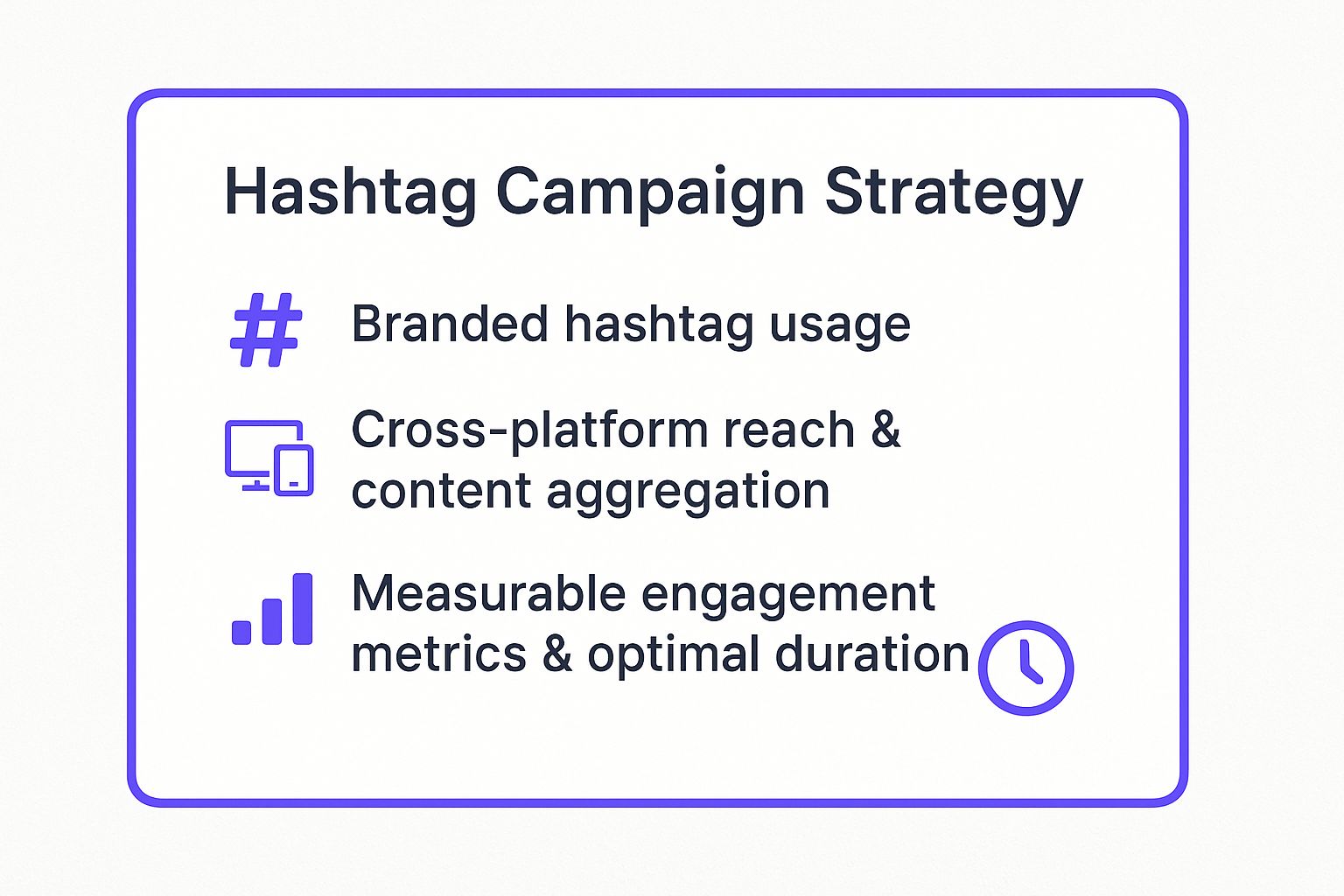
As the visual highlights, a powerful hashtag campaign integrates your brand identity into user posts, aggregates content across multiple platforms, and provides clear metrics for tracking success. This framework turns a simple tag into a robust engine for content creation and community building.
2. Contest and Giveaway Strategy
A contest and giveaway strategy is a powerful method for incentivising high-quality user generated content by offering rewards in exchange for participation. This approach gamifies the content creation process, encouraging users to submit photos, videos, or other creative entries that align with a brand's campaign for a chance to win a prize. It effectively combines the powerful motivation of a potential reward with a clear creative challenge, resulting in a surge of brand-relevant content.
This strategy is highly effective because it provides a clear value exchange for the user's effort, leading to higher participation rates and better-quality submissions. Contests can significantly boost brand engagement, rapidly grow your social media following, and generate a rich library of authentic content that can be repurposed across marketing channels. Well-known examples include Lay's 'Do Us A Flavour' campaign, which invited fans to invent new chip flavours, and Doritos' legendary 'Crash the Super Bowl' contest, where users submitted their own commercials for a chance to be aired during the game.

How to Implement a Contest and Giveaway Strategy
Executing a successful UGC contest requires more than just a desirable prize; it demands a well-organised framework that is fair, engaging, and legally compliant. A structured approach ensures participants understand the requirements and feel motivated to contribute their best work.
- Offer Relevant Prizes: Your prize must be compelling and directly aligned with the interests of your target audience. A generic prize might attract many entries, but a brand-related prize (like a year's supply of your product or a unique brand experience) will attract true fans who are more likely to become long-term advocates.
- Establish Clear Terms and Conditions: Transparency is crucial for building trust. Clearly outline the contest rules, eligibility requirements, submission deadlines, judging criteria, and how the winner will be chosen and announced. This prevents confusion and ensures the contest is perceived as fair. Also, ensure your contest complies with each social media platform's specific promotional guidelines.
- Optimise Entry Methods for Engagement: Design the entry process to support your campaign goals. For instance, requiring participants to follow your account, tag friends, and use a specific hashtag can simultaneously generate content and boost key social media metrics. You can learn more about how to boost social media engagement on repostly.app through these methods.
- Showcase More Than Just the Winner: While there can only be one grand prize winner, celebrating multiple participants is key to building a strong community. Regularly feature high-quality submissions on your social media profiles, stories, or website throughout the campaign. This recognition validates participants' efforts and encourages continued engagement long after the contest ends.
3. Customer Review and Testimonial Strategy
A customer review and testimonial strategy is a powerful form of user generated content that centres on amplifying the authentic voices of satisfied customers. This approach involves systematically collecting, curating, and showcasing customer feedback, reviews, and testimonials across marketing channels to build credibility and social proof. By turning customer satisfaction into visible, trustworthy content, brands can directly influence the purchasing decisions of prospective buyers.
This strategy leverages the immense power of peer recommendations, which consumers often trust more than branded advertisements. When a potential customer reads a detailed review or watches a genuine testimonial, they are receiving an unbiased evaluation that builds confidence and validates the brand's promises. This form of social proof is fundamental to modern marketing, as seen in Amazon's detailed product reviews, Sephora's user-submitted photos, and Airbnb's two-way review system, all of which have become integral to the customer experience.
How to Implement a Customer Review and Testimonial Strategy
Developing an effective review and testimonial pipeline requires a proactive and organised approach. It’s about creating a simple, rewarding process for customers to share their feedback and then strategically using that content to enhance brand reputation.
- Simplify the Submission Process: The easier it is for a customer to leave a review, the more likely they are to do so. Use simple email follow-ups with direct links, one-click rating systems, and clear instructions. Remove any unnecessary steps or friction that might discourage participation.
- Proactively Request Feedback: Don't wait for reviews to trickle in organically. Systematically follow up with customers post-purchase or after a service has been completed. To proactively gather valuable content, explore proven strategies for asking for a review and boosting customer feedback.
- Engage with All Feedback: Respond professionally and promptly to all reviews, both positive and negative. Thanking customers for positive feedback shows appreciation, while addressing negative comments demonstrates a commitment to customer service and continuous improvement. This public engagement builds further trust.
- Amplify and Repurpose Content: Showcase your best reviews and testimonials everywhere. Feature them on your website's homepage, product pages, social media feeds, and in email marketing campaigns. Transforming a written review into a visually appealing graphic or a quote into a short video can extend its reach and impact significantly.
4. Social Media Takeover Strategy
A social media takeover is a dynamic user generated content strategy where a brand temporarily hands over the reins of its social media accounts to an external creator. This creator could be an influencer, a loyal customer, a brand advocate, or even an employee, who then posts content from their unique perspective for a set period. This approach infuses a brand's feed with fresh energy, authenticity, and a new voice, offering followers a break from standard corporate messaging.
This strategy excels at humanising a brand and building deeper connections with the audience. When a creator shares their genuine experiences or behind-the-scenes insights, they provide a credible, third-party endorsement that feels more like a recommendation from a friend than a marketing message. This peer-driven narrative can significantly boost engagement and trust. Iconic examples include National Geographic's photographer takeovers from remote locations, NASA's astronaut takeovers from the International Space Station, and Adidas’ athlete takeovers during major sporting events, all of which provide exclusive and highly engaging content.
How to Implement a Social Media Takeover
A successful takeover requires a foundation of trust, clear communication, and strategic planning. While the content should feel spontaneous, the backend process must be well-organised to protect brand integrity and achieve specific goals.
- Set Clear Objectives and Guidelines: Before handing over your login details, define what the takeover aims to achieve. Is the goal to promote a new product, showcase company culture, or reach a new demographic? Based on this, establish clear content guidelines for the creator. Specify the tone of voice, types of content to post (e.g., Stories, Reels, feed posts), any off-limit topics, and mandatory hashtags or mentions.
- Select the Right Creator: Your choice of host is crucial. Select someone whose personal brand, values, and audience align seamlessly with your own. A passionate customer, an industry expert, or an influencer with a relevant following can all be excellent choices. Thoroughly vet their previous content to ensure they are a suitable brand representative.
- Promote the Takeover Extensively: Build excitement and anticipation in the days leading up to the event. Announce the takeover across all your channels, introducing the guest creator and explaining what followers can expect. Use countdowns, teaser videos, and Q&A sessions to generate buzz and ensure a large audience tunes in on the day.
- Establish a Content Review Process: Decide on the level of freedom you will grant the creator. For highly regulated or sensitive brands, a pre-approval process where content is reviewed before going live is advisable. For others, real-time monitoring may suffice. Ensure you have a plan to engage with comments and questions during the takeover to support your guest and keep the conversation flowing.
5. Community Challenge Strategy
A community challenge strategy moves beyond one-off contests to foster sustained engagement and skill development among your audience. This approach involves creating recurring challenges that encourage users to participate in themed activities or creative projects, transforming a brand's social space into an interactive hub. Unlike a time-limited competition, this user generated content strategy is designed to build a habit of participation and strengthen community bonds through shared goals and mutual encouragement.
This strategy excels at turning passive followers into a dedicated and active community. By providing a structured outlet for creativity and self-improvement, brands can become an integral part of their customers' daily or weekly routines. Peloton’s monthly fitness challenges, for instance, motivate members to consistently engage with the platform and share their progress, while Adobe’s creative challenges provide daily inspiration and a showcase for designers' skills. This long-term engagement generates a continuous stream of authentic, high-quality UGC while positioning the brand as a facilitator of personal growth and connection.
How to Implement a Community Challenge
Building a successful community challenge requires a focus on participation and interaction rather than just competition. The goal is to create an inclusive and supportive environment that keeps users coming back.
- Start with Achievable Goals: Begin with challenges that are simple and accessible to a wide range of skill levels. The initial barrier to entry should be low to encourage maximum participation. For example, a photography brand could start with a "rule of thirds" challenge before moving to more complex techniques.
- Create Clear Progress Tracking: Users are motivated by seeing their progress. Implement a system, whether it’s a dedicated hashtag series (e.g., #BrandChallengeDay1, #BrandChallengeDay2) or a simple checklist, that allows participants to track their journey. This creates a sense of accomplishment and keeps them engaged for the duration of the challenge.
- Celebrate Participation, Not Just Winners: While you can highlight exceptional submissions, the core focus should be on celebrating everyone who takes part. Regularly feature a wide variety of entries, respond to comments, and create a culture where effort is praised. This makes the experience more about community and less about winning a prize.
- Build Interaction into the Structure: Encourage participants to engage with one another. Prompt them to comment on each other's work, share tips, or form small groups. This peer-to-peer interaction is crucial for turning a simple challenge into a thriving community and is a key element of effective audience engagement strategies.
- Regularly Refresh Challenge Themes: Keep the momentum going by introducing new themes, formats, and prompts. This prevents user fatigue and gives community members new reasons to participate. Themed monthly or seasonal challenges, like Inktober's annual drawing event, provide a fresh sense of excitement and creativity.
6. User Story and Experience Sharing Strategy
A user story and experience sharing strategy moves beyond simple product photos or mentions to capture the deeper, narrative-driven connection customers have with a brand. This approach focuses on collecting and amplifying authentic stories, journeys, and testimonials that showcase real-life applications and emotional impact. By encouraging users to share their personal experiences, you create a powerful library of relatable content that demonstrates your product's value in a human, compelling way.
This strategy is one of the most effective user generated content strategies for building profound trust and connection. When a potential customer reads about another person's successful transformation or memorable experience, it resonates far more deeply than a standard marketing claim. These narratives provide social proof and illustrate the tangible outcomes your brand delivers. Well-known examples include Airbnb's host and guest stories that bring travel experiences to life, and Patagonia’s features on customers engaged in environmental activism, aligning the brand with a shared purpose.
How to Implement a User Story and Experience Sharing Strategy
Gathering and sharing compelling user stories requires a proactive and organised approach. You need to create a system that not only encourages submissions but also helps users shape their experiences into impactful narratives that will resonate with a wider audience.
- Provide Clear Prompts and Templates: Don't just ask for "stories." Guide your audience with specific prompts like, "Share the moment you realised our product made a difference," or "Describe the biggest challenge you overcame with our help." Providing a simple template or a set of guiding questions can help users structure their thoughts and produce higher-quality, more focused content.
- Focus on Transformation and Emotion: The most powerful stories are often those that detail a transformation, whether it's a personal achievement, a business success, or a memorable life event. Encourage users to share the "before and after" or the emotional core of their experience. This narrative arc makes the content more engaging and memorable for others.
- Utilise Multiple Content Formats: Stories can be told in many ways. Allow and encourage submissions across different formats, including written blog-style posts, short-form video testimonials, photo essays, or even audio clips. This diversity caters to different audience preferences and gives you a wider range of assets to repurpose across various marketing channels.
- Create a Dedicated Sharing Hub: Establish a clear, central place for users to submit and view stories, such as a dedicated page on your website, a specific blog category, or a recurring feature in your newsletter. This not only simplifies the submission process but also creates a valuable, permanent archive of social proof. For an explicit strategy to gather authentic narratives and personal experiences from your audience, learn about implementing and reviewing Zealy quests for personal story posts, which can gamify the submission process.
7. Product Integration and Styling Strategy
A product integration and styling strategy is one of the most visually compelling user generated content strategies, encouraging customers to become brand storytellers. This approach motivates users to share content showcasing how they incorporate your products into their personal style, homes, or daily routines. It moves beyond a simple product photo to demonstrate real-world application, aesthetic, and utility, providing authentic social proof for potential buyers.
This strategy effectively bridges the gap between your product and the customer's lifestyle. When someone posts a photo of how they've styled your furniture in their living room or integrated your accessory into their outfit, they provide invaluable context and inspiration for others. This peer-generated lookbook is far more relatable and trustworthy than professionally staged brand photos. Iconic examples include West Elm, which features customers' beautifully styled homes, and Glossier, whose feed is a mosaic of real people using their makeup products in diverse ways.

How to Implement a Product Integration and Styling Strategy
Launching a successful styling-focused UGC campaign requires inspiring your audience and giving them the tools and motivation to create high-quality, on-brand content. This is about nurturing creativity and celebrating your customers' unique perspectives.
- Define a Clear Aesthetic and Theme: Guide your users by establishing a theme. This could be seasonal (e.g., "summer styling"), room-specific (e.g., "#MyWestElmOffice"), or use-case-oriented (e.g., "workout-ready looks"). A clear theme focuses submissions and makes the campaign more cohesive.
- Provide Inspiration and Guidance: Don't assume users will know what to post. Create your own content showing different styling ideas, offer photography tips to improve image quality, and develop simple styling guides. The goal is to lower the barrier to entry and spark creative ideas.
- Create a Dedicated Branded Hashtag: As with other campaigns, a unique hashtag is crucial for collecting and curating submissions. Make it intuitive and relevant, such as IKEA’s #IKEAatmine or Anthropologie’s #MyAnthropologie. Promote this hashtag across product pages, in-store, and on social channels.
- Feature and Reward Creatively: Regularly showcase the best submissions on your social media profiles, website, and even in email newsletters. Tag the original creator to give them public recognition. Consider running contests where the best-styled photo wins a prize, which adds a powerful incentive for participation.
By highlighting how real people use and love your products, this strategy turns customers into influential brand advocates. Integrating this approach is a key part of building an engaging and effective content plan. For more guidance on building a comprehensive plan, you can learn more about how to create a social media strategy for your brand. This method not only generates a steady stream of authentic visuals but also builds a strong community of creative and engaged followers who feel seen and valued by your brand.
User-Generated Content Strategy Comparison
| Strategy | Implementation Complexity 🔄 | Resource Requirements ⚡ | Expected Outcomes 📊 | Ideal Use Cases 💡 | Key Advantages ⭐ |
|---|---|---|---|---|---|
| Hashtag Campaign Strategy | Low - Easy to launch but needs promotion | Low - Minimal budget for hashtag creation | High engagement & viral reach; measurable | Brand awareness campaigns, viral content | Low cost, scalable authentic content |
| Contest and Giveaway Strategy | Medium - More planning, legal compliance | Medium - Prize costs, legal support needed | High participation, follower growth, quality | Engagement boosts, follower acquisition | Incentivized participation, cost-effective |
| Customer Review/Testimonial | Medium - Requires ongoing management | Low to Medium - Tools for collection | Builds trust, influences purchases, SEO boost | Reputation building, purchase decision support | Credibility boost, valuable customer insight |
| Social Media Takeover Strategy | Medium to High - Vetting and real-time mgmt | Medium - Creator coordination and monitoring | Strong engagement uplift, new audience reach | Fresh brand perspectives, influencer marketing | Authentic content, increased engagement |
| Community Challenge Strategy | High - Continuous management and theme refresh | Medium to High - Management and engagement | Sustained engagement, community loyalty | Long-term community building, skill development | Strong bonds, repeat participation |
| User Story & Experience Sharing | Medium to High - Story collection and curation | Medium - Editing and content management | High emotional engagement and trust | Emotional connection, brand storytelling | Builds authentic trust, relatable content |
| Product Integration & Styling | Medium - Needs styling guidance and curation | Medium - Content support and guidance | Increased purchase intent and inspiration | Lifestyle brands, fashion, home decor | Boosts purchase intent, creative inspiration |
From Strategy to Success: Automating Your UGC Engine
We have journeyed through seven powerful and distinct user generated content strategies, each offering a unique blueprint for transforming your audience from passive observers into active brand advocates. From the viral potential of a well-crafted Hashtag Campaign to the community-building power of a Social Media Takeover, the core principle remains the same: your customers are your most authentic and influential storytellers.
Harnessing customer reviews, running engaging contests, and encouraging users to share how they integrate your products into their lives are not just tactics, they are fundamental shifts in how modern brands build trust and connection. The true challenge, however, is not in initiating these campaigns, but in sustaining their momentum. A successful UGC programme is not a series of one-off events; it is a continuous, self-fuelling cycle of engagement, creation, curation, and amplification.
Key Takeaways for Sustainable Growth
The real value of these strategies is realised when they work in concert, creating a rich tapestry of social proof that resonates far more deeply than any branded message ever could. Remember, the goal is to make content creation a natural and rewarding experience for your community.
- Authenticity is Non-Negotiable: Whether it's a raw video testimonial or a stylised product photo, the unpolished, genuine nature of UGC is its greatest strength. Your role is to guide and encourage, not to direct and control.
- Clarity is Kindness: For any of these user generated content strategies to succeed, your audience needs to know exactly what to do, what the incentive is, and how their contribution will be recognised. Clear guidelines and compelling calls to action are essential.
- Consistency Breeds Community: Sporadic campaigns yield sporadic results. By consistently implementing UGC initiatives and celebrating contributions, you cultivate a loyal community that feels seen, valued, and integral to your brand’s story.
Your Actionable Next Steps
Mastering the art of user generated content strategies is a journey, not a destination. The transition from theory to tangible results requires a deliberate and organised approach. To get started, focus on building a solid foundation.
- Select Your Starting Strategy: Don't try to implement all seven strategies at once. Review your current marketing objectives and audience behaviour. Choose one strategy-perhaps a simple Contest and Giveaway-that aligns best with your immediate goals and resources.
- Define Your Workflow: Before you launch, map out the entire process. How will you discover and collect submissions? How will you obtain permissions? How will you credit creators and schedule the content for publication across different platforms?
- Integrate Automation: This is the critical step that separates struggling programmes from thriving ones. Manually tracking hashtags, downloading content, and posting across multiple channels is inefficient and unsustainable. Implementing a tool to automate this workflow is the key to scaling your efforts without burning out.
Ultimately, the power of user generated content is its ability to create a dynamic, authentic, and scalable marketing engine. By moving from manual, piecemeal efforts to a streamlined, automated system, you unlock the full potential of your community's creativity. This frees up your valuable time to focus on what truly matters: fostering relationships, analysing performance, and strategising your next innovative campaign. The result is a powerful, self-perpetuating ecosystem that builds unwavering brand loyalty, drives meaningful engagement, and amplifies your presence across the digital landscape.
Ready to turn these user generated content strategies into an automated, high-performing engine? Repostly centralises your UGC collection, scheduling, and analytics, allowing you to amplify your community's voice across all social platforms with ease. Start your free trial today and see how effortless scaling your UGC can be. Repostly
Keep reading

10 Fresh Instagram Story Idea Tactics for 2025
Stuck for content? Discover our top Instagram story idea list, with actionable tips to boost engagement and grow your audience in 2025.
A Practical Social Media Planner for German Markets
Build a results-driven social media planner for Germany. This guide offers actionable strategies for content, scheduling, and analysis in the German market.

Crafting Your Social Media Content Plan
Stop guessing and start strategizing. This guide provides an actionable social media content plan to audit, plan, and execute content that gets results.
Post once. Show up everywhere.
Start your 7-day free trial and publish your next video to every platform in minutes.Pick a plan and publish your next video to every platform in minutes.
Start your free trialSee plansCancel anytime